
People love to be offended. They do. No one admits it, but they love it. They love it because they feel like it gives them power over someone else. You can really put someone in their place when you explain “how utterly offended you were” by what they said. Not so much on the sterile and detached world of the internet but in real life, to watch that person shrink into their little box and worry about every word they next might say for risk of offending you again, that you might smite them once more. How satisfying.
Jeremy
Clarkson is one example, he’s a high and mighty in the world of presenters and TV
personalities and in realism the loud mouthed Doncastian should have known
better than to blow his top while already having chalked up a number of other
infractions - however deservedly or not. Was his outburst out of order?
Probably, yes. Was the reaction to it justified? Or rather – was it equal to
the outburst? Hmmm...
 There is a
culture of over-sensitivity creeping through society like a rash. Just look
around. Poke around on the internet, say something out of place or something
which has the smallest possibility of being misconstrued and you’ll be on the
end of a keyboard warrior in the blink of an eye. Complaining about how you
hurt their feelings and you’re just a big fat bully, trolling all these innocent,
gentle people who've done nothing wrong ever in their entire whitewashed lives. You've all met them.
There is a
culture of over-sensitivity creeping through society like a rash. Just look
around. Poke around on the internet, say something out of place or something
which has the smallest possibility of being misconstrued and you’ll be on the
end of a keyboard warrior in the blink of an eye. Complaining about how you
hurt their feelings and you’re just a big fat bully, trolling all these innocent,
gentle people who've done nothing wrong ever in their entire whitewashed lives. You've all met them.
You meet them
in real life too, more and more these days. I recall a time, not so long ago,
when one could make a joke in mixed company and, provided it wasn’t
spectacularly racist, you could pretty much get away with anything. Not now
though, ooh no; no jokes, no quips and no wisecracks. Lest you inadvertently
offend someone who was eves-dropping or who stumbled in on your conversation,
someone who probably should have been minding there own business in the first
place, but who has now made it the sole goal in life to be offended by you.
If we return
to Top Gear, Mr Clarkson and the recent fiasco in Argentina we see a fantastic
example of this. If you are unfamiliar with the story, it has to do with the
number plate characters of the car used by Mr Clarkson during a Top Gear
Argentina special. The number plate reads H982 FKL. In case you’re modern
history or international abbreviations are a bit rusty, someone inferred from
this random assignment of numbers given to a 1990 Porche that it made reference
to the Falklands conflict in some derogatory sense.
Let’s look at
the logic behind this a little more closely.
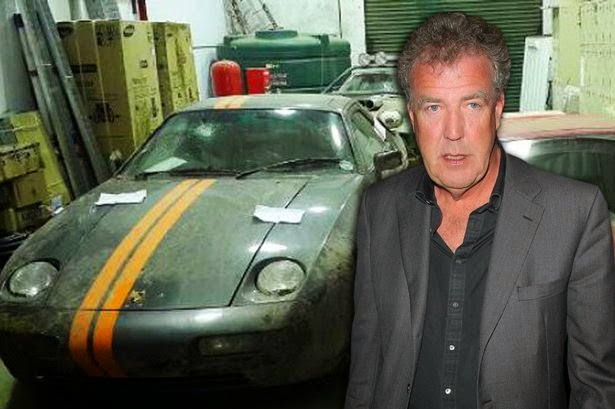 Firstly it has to be said this is an
exceptionally unfortunate arrangement of alpha-numerical characters, or then
again, is it? Firstly, the producers buy the vehicles for the show specials;
the presenters might have a choice of the type of car they want but the
producers find and purchase it. Initially then it would seem the fault is with
the producers but is there blame to be applied here? Can it be reasonably argued
that upon deciding the Argentinean destination for the show special that the
producers searched millions of registrations for this exact one? No, of course
not, that would be ridiculous.
Firstly it has to be said this is an
exceptionally unfortunate arrangement of alpha-numerical characters, or then
again, is it? Firstly, the producers buy the vehicles for the show specials;
the presenters might have a choice of the type of car they want but the
producers find and purchase it. Initially then it would seem the fault is with
the producers but is there blame to be applied here? Can it be reasonably argued
that upon deciding the Argentinean destination for the show special that the
producers searched millions of registrations for this exact one? No, of course
not, that would be ridiculous.
Secondly
there is the problem of the actual Falklands reference, 982 FKL. Naturally you
discount the first two characters leaving the 82 FKL. However, though the 82
may be attributed to 1982, the start of the Falklands war by Argentina invading
the Falkland Islands, the FKL isn’t even the recognised abbreviation for the
Falklands; it is FLK, a minor variance
you will agree but as we’re being pernickety and nit-picking every little
detail to suit this argument... As I was saying; making it their sole purpose
in life to make sure they have something to be offended about.
Equally
though, could not English viewers be offended by Richard Hammonds number plate
- EKH 646J? After all in 1646 there was a bloody battle in Great Torrington,
the last battle of the English Civil War no less. Yet I hear no cry of offense
from English historians or the general English public.
The problem
is that there is a sense of entitlement like never before in society and being
offended seems to have become not only trendy but also an extension of some
warped narcissistic entitlement complex. People don’t have thick skin anymore;
they don’t seem to have skin at all. Every tiny comment no matter how harmless
with be tirelessly picked apart for something, anything, to take offence to so
they can feed their lust for self-absorption. You can almost imagine them
salivating with baited breath, having not fed their addiction, waiting for you
to say something wrong – or even something right that can be twisted into
something wrong; “those trousers look brilliant on you”, “so you’re saying all
my other clothes look terrible? How can you say that!? That’s so rude!”
And so it
goes.
So what are we to do about this culture of over-sensitive delicate little flowers with raging superiority complexes? What Indeed. Are they going to have to learn to suck it up or are we going to have to learn to tone it down. The truth is, they are going to have to learn to suck it up and here’s why; there are already a number, nay, a myriad of concessions made for various levels of offensive materials – be it pornography or racist remarks etc and quite rightly so I might add. There is enough protection for what might be regarded as the ‘protected characteristics’ of any individual or group. Anything beyond that begins to creep towards oppression of the freedom we have to express ourselves and that is a dangerous thing. In regards to making sure you don’t call an Afro-Caribbean person a ‘nigger’ or make lewd remarks about the deceased at a funeral I think we can all agree that these things are unacceptable and successfully differentiate between acceptable behaviour and being an ass without being babysat.
How do we stop this culture of over-sensitivity? Not by being overtly insensitive but by simply maintaining that level of good courteous and polite behaviour that the civilised world has been built on, we don’t need to change how we act, those with a problem with everything need to alter how they chose to over-react.
A.R. Bell
#LogicShotgun
@ARB_itrary


